
We may earn a commission when you buy through links on this site, at no extra cost to you. As an Amazon Associate I earn from qualifying purchases. Read our affiliate disclosure.
Short answer
If the light is flashing, ease off and avoid hard acceleration, hills and heavy loads; if it keeps flashing, or the car shakes, loses power, smells of fuel or overheats, park somewhere safe and get help. If it’s solid, read the code soon. To read it yourself, our pick is the BlueDriver OBD2 Scanner. See the BlueDriver OBD2 Scanner at Amazon.
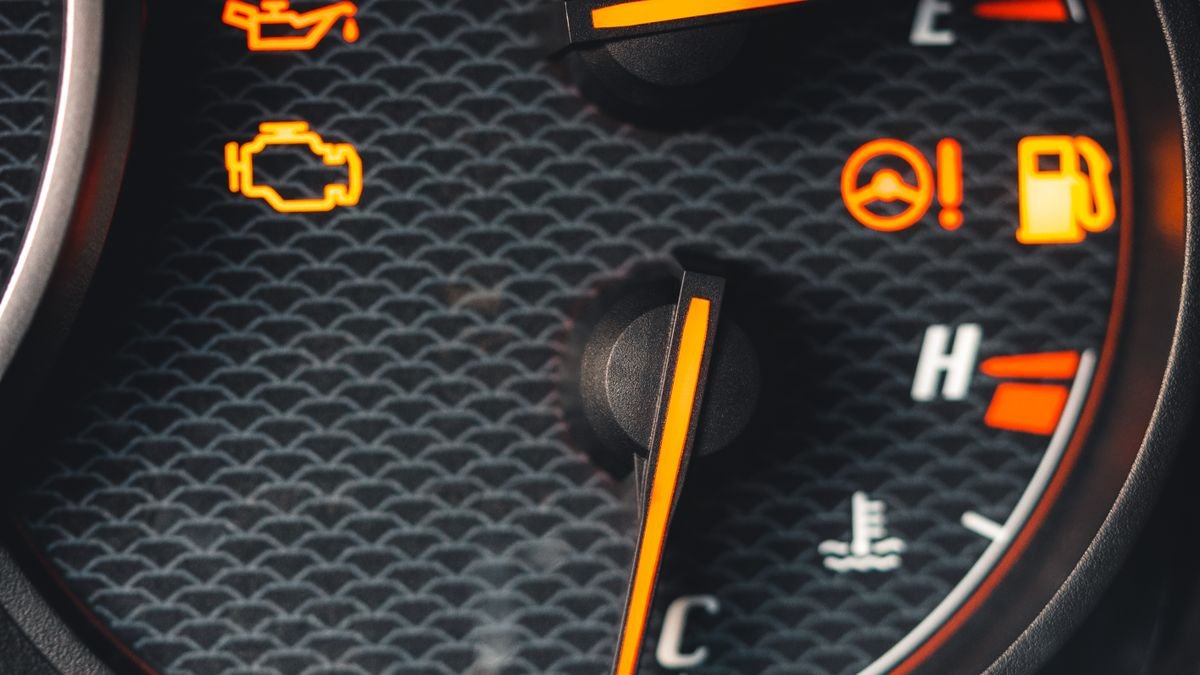
Is your check engine light on? First, look at whether it’s solid or flashing. A solid light means the car has found a problem and you should get it checked soon, but you don’t need to panic. A flashing light means a more serious problem, often a misfire that can damage the catalytic converter, so slow down right away.
The short answer: if it’s solid and the car drives normally, the EPA says there’s “no cause for panic,” but it’s still a warning, not an all-clear: follow your owner’s manual, check that your gas cap is tight when you stop, and read the code with a scanner or at a shop soon. If it’s flashing, ease off and avoid hard acceleration, hills and heavy loads. If it keeps flashing, or the car shakes, loses power, smells of fuel or overheats, park somewhere safe and get help. To read the code yourself, our pick is the BlueDriver OBD2 Scanner, a Bluetooth scanner with no subscription.
This guide quotes the EPA’s consumer brochure on OBD-II, Chevrolet’s 2019 Impala owner’s manual and Toyota’s warning-lights page directly. Your own owner’s manual has the final word for your car.
Jump to: Keep driving or stop? · What to do · Common codes · Scanner picks · FAQ
Check engine light on: keep driving or stop?
| What you see | Keep driving? | Do this |
|---|---|---|
| Solid light | Usually, if the car drives normally, but it’s a warning, not an all-clear; get it checked soon | Check the gas cap at your destination. If the light stays on after a few trips, have the car serviced or read the code. |
| Flashing light | Only gently, for as short a time as possible | Slow down; no hard acceleration, hills or heavy loads. Some makers, such as Chevrolet, say to park, switch off, wait at least 10 seconds and restart if it keeps flashing; follow your owner’s manual. Still flashing: get service as soon as possible. |
| Any red warning light as well (such as oil pressure or temperature) | No | Red means “immediate attention,” per Toyota. Stop somewhere safe and check your manual. |
If the light is solid
The EPA says: “There is no cause for panic. The vehicle is just telling you to seek attention soon.” Chevrolet’s manual agrees: “If the light is on steady: A malfunction has been detected. Diagnosis and service may be required.”
The EPA also warns not to wait too long: “If the light does not go out after a few short trips following gas cap replacement or tightening, have your vehicle serviced… soon! Delaying assistance could lead to more expensive damage.”
If the light is flashing
The EPA says a flashing light means “a severe engine problem such as a catalyst-damaging misfire is occurring and should be addressed as soon as possible. You can still drive safely, but should minimize your time on the road. Try not to drive the vehicle at high speed or with excess weight.”
Chevrolet is stricter. It says to “reduce vehicle speed and avoid hard accelerations and uphill grades. If towing a trailer, reduce the amount of cargo being hauled as soon as possible.” Then: “If the light continues to flash, find a safe place to park. Turn the vehicle off and wait at least 10 seconds before restarting the engine. If the light is still flashing… see your dealer for service as soon as possible.”
Where the sources differ: the EPA’s brochure dates from 2002 and says you “can still drive safely” with a flashing light. Chevrolet says to park if it keeps flashing. Our advice: follow your owner’s manual, treat a flashing light as “slow down now,” and park and get help if it keeps flashing or the car shakes, loses power, smells of fuel or overheats. That last list comes from mechanics’ and the AA’s general advice, not from a carmaker’s manual.
What to do, step by step
- Check whether it’s solid or flashing (see the table above).
- If it’s flashing, ease off: no hard acceleration, hills or heavy loads (Chevrolet; EPA). If it keeps flashing, park safely, switch off, wait at least 10 seconds and restart. If it’s still flashing, get service as soon as possible (Chevrolet).
- Check the other lights. Toyota says “Red icons indicate a condition that requires immediate attention, such as an open door or low engine oil pressure,” while yellow icons “indicate an item of importance… but are not necessarily a warning.” A red oil-pressure or temperature light changes the answer to “stop.”
- Check the gas cap when you reach your destination, and make sure it isn’t loose or missing (EPA). Turn the engine off when you refuel.
- Give it a few trips. Chevrolet says, “A loose or missing fuel cap may cause the light to come on… A few driving trips with the cap properly installed may turn the light off.” If it stays on, get the car serviced soon (EPA).
- Read the code. Every 1996-and-newer car and light truck uses OBD-II, according to the EPA, so a scanner can read the trouble code.
- Write the code down before clearing anything. Clearing a code doesn’t fix the fault, and it resets the car’s readiness monitors.
What’s normal, and what isn’t
- A brief flash at start-up is normal. The EPA says the light “should flash briefly” when you turn the key, and “After this brief flash, the light should stay off.”
- The light went off by itself. The EPA says the system “is doing its job by verifying that a problem temporarily existed but has since been corrected… Your vehicle needs no special attention unless the light comes on again.”
- It came on right after you got gas. A loose or missing gas cap is a known trigger (EPA; Chevrolet). Tighten it and give it a few trips.
Common check engine light codes
Once you have the code, start here:
- P0300: random or multiple cylinder misfire, the usual cause of a flashing light
- P0420: catalytic converter efficiency below threshold
- P0171: system too lean (bank 1)
- P0442: small EVAP leak, often the gas cap
- P0455: large EVAP leak, most often a loose or missing gas cap
We may earn a commission when you buy through links on this site, at no extra cost to you. As an Amazon Associate I earn from qualifying purchases. Read our affiliate disclosure.
Read the code yourself: our scanner picks
Our pick: the BlueDriver OBD2 Scanner, Car and Driver’s Best Bluetooth Scanner in its August 2026 test, with no subscription. It reads check-engine codes and, on supported vehicles, ABS, airbag, TPMS and transmission codes, and builds repair reports matched to your VIN.
Where to buy: Check price at Amazon · Check price at Walmart · Check price at BlueDriver
- For enthusiasts: the OBDLink MX+ works with iPhone, Android and Windows and with apps like FORScan, and has a 3-year warranty. Check the current price at Amazon.
- On a budget: the Veepeak OBDCheck BLE is an adapter that pairs with a free third-party app to read and clear codes. Check the current price at Amazon.
Full specs, pros and cons are in our best Bluetooth OBD2 scanners guide. Weighing a subscription scanner? See BlueDriver vs FIXD.
Don’t leave it plugged in. Chevrolet’s manual warns that devices plugged into the diagnostic port that aren’t for emissions testing or service “may affect vehicle operation.” Unplug the scanner when you’re done.
How we built this guide
We did not diagnose any cars for this guide. Mike re-checked every quote on November 17, 2026, against the EPA’s OBD-II brochure (EPA420-F-02-016, from 2002, in the EPA’s archive), Chevrolet’s 2019 Impala owner’s manual and Toyota’s dashboard warning-lights page. The scanner picks match our scanner guide, which relies on Car and Driver’s 2026 test. We checked every linked product’s Amazon page on November 17, 2026.
More in this topic: Car tech start-here guide.
For our full process, see how we choose the gear we recommend.
FAQ
Is it safe to drive with the check engine light on?
If it’s solid and the car drives normally, yes, for now. Get it checked soon. If it’s flashing, drive gently and as little as possible, and park and get help if it keeps flashing or the car shakes, loses power, smells of fuel or overheats.
Can I drive a couple of miles with the check engine light flashing?
Only gently, and follow your manual. Chevrolet says to slow down, and to park and restart if it keeps flashing. If the car is shaking or losing power, a tow is the safer call.
The light was flashing, then stopped after a restart. Is it OK to drive?
Drive gently and get the code read soon. Don’t clear it first, so a shop can see what happened. If it starts flashing again, follow Chevrolet’s advice and get service as soon as possible.
Can a loose gas cap turn on the check engine light?
Yes. Both the EPA and Chevrolet say so. Tighten or replace the cap, and the light may go off after a few trips.
How long can I drive with the check engine light on?
No source gives a number. The EPA says to get it serviced “soon” if a solid light stays on after you’ve fixed the gas cap, because “Delaying assistance could lead to more expensive damage.”
Should I clear the code after reading it?
Not before you know what’s wrong. Clearing doesn’t fix anything, and it resets the car’s readiness monitors. Write the code down or take a screenshot first.
What do red and yellow warning lights mean?
Toyota says red icons need immediate attention, such as low oil pressure, while yellow icons are important but “not necessarily a warning.” The check engine light is amber, so check whether any red lights are on with it.
Another warning light on? See our guide to what to do when the tire pressure light is on.

Mike is the byline for The Car Gear Guide’s research team. We read independent tests, maker specs and fit guides, then turn them into plain-English buying guides for US drivers. We don’t hand-test the products we recommend. Guides are researched and drafted with AI tools, then fact-checked and edited before they go up.